Friday, April 22, 2011

Alt Attribute & SEO Optimization

SEO Optimization images is becoming increasingly more essential in SEO (Seo optimization) for websites. The ALT attribute is a critical step that is often overlooked. This can be a lost chance of better rankings.


In Google's webmaster guidelines, they advise the use of alternative text for that images in your web site:

Images:. Use the alt attribute to provide descriptive text. In addition, we recommend using a human-readable caption and descriptive text round the image.

Why would they ask us to do that? The answer is easy, really; search engines like google have the same problem as blind users. They can't see the images.

Many webmasters and inexperienced or unethical SEOs abuse the use of this attribute, attempting to stuff it with keywords, hoping to achieve a particular keyword density, which is not as relevant for rankings now as it was previously.

On the other hand, high keyword density can, on some search engines, trigger spam filters, which might result in a penalty for the site's ranking. Even without this type of penalty, your site's rankings will not take advantage of this plan.
This method also puts persons who use screen readers at a greater disadvantage. Screen readers are software-based tools that actually read aloud the contents of what is displayed on the screen. In browsing the web, the alt features of images are read aloud too.

Imagine listening to a paragraph of text that is followed by repetitions of numerous keywords. The page will be not even close to accessible, and, to put it mildly, would be found quite annoying.
What exactly is an Alt attribute?

An ALT attribute should not be used as a description or perhaps a label to have an image, though lots of people utilize it in that fashion. Though it might seem natural to assume that alternate text is a label or a description, it is not!

What used inside an image's alt attribute ought to be its text equivalent and convey the same information or serve exactly the same purpose the image would.

The thing is to supply the same functional information that the visual user would see. The alt attribute text should function as a "stand in" when the image is not available. Ask yourself this: If you were to replace the image using the text, would most users get the same basic information, and would it generate the same response?
A few examples:


Some SEO Optimization Tips

If a search button is really a magnifying glass or binoculars its alt text should be 'search' or 'find' not 'magnifying glass' or 'binoculars'.

If the image is meant to convey the literal contents of the look, a description is suitable.

If it's meant to convey data, then that data is what is appropriate.

If it's meant to convey using a function, then the function itself is what ought to be used.

Some Alt Attribute Guidelines:

Always add alt attributes to images. Alt is mandatory for accessibility as well as for valid XHTML.

For images that play merely a decorative role within the page, use an empty alt (i.e. alt="") or a CSS background image so that reading browsers do not bother users by uttering such things as "spacer image".

Keep in mind that it's the function of the image we're trying to convey. For instance; any button images shouldn't range from the word "button" within the alt text. They ought to emphasize the action performed through the button.

Alt text should be determined by context. Exactly the same image inside a different context may require drastically different alt text.

Try to flow alt text with the rest from the text because that is how it is going to be read with adaptive technologies like screen readers. Someone listening to your page should hardly remember that a graphic image can there be.
Please keep in mind that utilizing an alt attribute for every image is required to meet the minimum WAI requirements, that are used since the benchmark for accessibility laws in UK and the remainder of Europe. They are also necessary to meet "Section 508" accessibility requirements in america.

It is useful to categorize non-text content into three levels:

Eye-Candy
Mood-Setting
Content and Function

I. Eye-Candy

Eye-Candy are stuff that serve no purpose apart from to make a site visually appealing/attractive and (oftentimes) fulfill the marketing departments. There isn't any content value (though there may be value to some sighted user).

Never alt-ify eye-candy unless there is something there which will boost the usability from the site for somebody utilizing a non-visual user agent. Make use of a null alt attribute or background images in CSS for eye-candy.

II. Mood-Setting

This is actually the middle layer of graphics which might serve to set the mood or set happens as it were. These graphics aren't direct content and may not be considered essential, but they are important in they help frame what's going on.

Try to alt-ify the 2nd group as is sensible and is relevant. There might be times when doing this may be annoying or detrimental to other users. Then try to avoid it.

For instance; Alt text that's just like adjacent text is unnecessary, as well as an irritant to screen reader users. I suggest alt="" or background CSS images in such cases. But sometimes, it's important to get this content inside for all users.

Most times this will depend on context. Exactly the same image in a different context may need drastically different alt text. Obviously, content should always be fully available. How you go in this case is a judgment call.

III. Content and Function

This is when the look is the actual content. Always alt-ify content and functional images. Title and long description attributes can also be in order.
The reason many authors can't figure out why their alt text isn't working is that they don't know why the images exist. You need to figured out exactly what function a picture serves. Think about what it's about the image that's important to the page's intended audience.

Every graphic includes a reason for standing on that page: because it either enhances the theme/ mood/ atmosphere or it is advisable to what the page is trying to explain. Understanding what the look is perfect for makes alt text easier to write. And practice writing them definitely helps.
A method to check the usefulness of alternative text is to imagine reading the page over the telephone to someone. An amount you say when encountering a particular image to create the page understandable to the listener?

Besides the alt attribute you have a couple more tools at your disposal for images.
First, in degree of descriptiveness title is within between alt and longdesc. It adds useful information and can add flavor. The title attribute is optionally rendered by the user agent. Remember they are invisible and not shown as a "tooltip" when focus is received via the keyboard. (So much for device independence). So make use of the title attribute just for advisory information.
Second, the longdesc attribute points to the Link to a complete description of an image. If the information found in an image is essential to the meaning of the page (i.e. some important content will be lost if the image was removed), a longer description than the "alt" attribute can reasonably display should be used. It can provide for rich, expressive documentation of a visual image.

It ought to be used when alt and title are insufficient to embody the visual qualities of the image. As Clark [1] states, "A longdesc is a long description of the image...The goal is by using any length of description necessary to impart the facts from the graphic.

It would not be remiss to hope that the long description conjures an image - the look - in the mind's eye, an analogy that is true even for the totally blind."

Although the alt attribute is mandatory for web accessibility and for valid (X)HTML, not all images need alternative text, long descriptions, or titles.

In many cases, you are best just choosing your gut instinct -- if it's not essential to include it, and when you don't possess a strong urge to get it done, don't add that longdesc.

However, if it's essential for the entire page to work, then you have to include the alt text (or title or longdesc).

What's necessary and what's not depends a lot about the function of your image and it is context on the page.

The same image may need alt text (or title or longdesc) in one spot, although not in another. If an image provides simply no content or functional information alt="" or background CSS images may be appropriate to use. But if the image provides content or adds functional information an alt would be required and perhaps even a long description would be in order. Oftentimes this kind of thing is a judgement call.

Image Seo optimization Tips


Listed below are key steps in optimizing images:

Choose a logical file name that reinforces the keywords. You should use hyphens within the file name to isolate the keyword, but avoid to exceeding two hyphens. Avoid using underscores like a word separator, such as "brilliant-diamonds.jpg";

Label the file extension. For example, when the image search engine sees a ".jpg" (JPEG) file extension, it's likely to assume that the file is really a photo, and when it sees a ".gif" (GIF) file extension, it's going to assume that it is a graphic;

Ensure that the text nearby the image that's relevant to that image.
Again, do not lose a great opportunity to help your site with your images in search engines. Use these steps to rank better on all the engines and drive more traffic to your site TODAY.

Thursday, April 21, 2011

Search Engine Optimization


Manufacturers of retails goods need to leverage their Facebook presences to manage product recalls more cost effectively.


Some companies like Johnson & Johnson are starting so see the damage product recalls are costing in the modern age of fast information sharing — the company estimates over $900 million in lost sales and related expenditures last year. The brand is just one example are one of many companies that have undergone recalls in the last year and are still working to regain customers’ trust.


Cautionary tale


Kraft experienced a big debacle last year of moldy kids’ juices — and the problem is still continuing — so the creation of a Facebook tab to help manage the issues started out as very proactive. Alas, the tab moved to the very back of the page within days.


Moms were upset and consumers visiting the Facebook page for moldy juice information (many times referred there by a friend) thought the the tab appeared was missing rather than moved. Kraft learned the hard way that moms and other concerned parties wound up going elsewhere for information. They Googled the issue and stumbled across any pages mentioning it — including the brand-damaging image shown to the right.


Then other moms who were upset looked for information on Facebook and found groups like “I wont buy CAPRI sun till it comes in a clear juice package!!” Such groups had only a couple hundred members and no centralized, authoritative source of information, but instead had lots of unverified information further fueling hatred of the company. Perhaps Kraft should have created a page just for recalls or even just the juice recall, and that would have preserved the brand’s integrity on the site.


Three questions


Here are three important questions for product managers to think about amid recalls:


    What does this mean for our search engine optimization?

    What about the amplification risk?

    What would the newest consumer find about the brand online?

In case the anecdote above hasn’t sold you on why a product recall is best managed on Facebook, below are three reasons.


Facebook is free


Besides a staff or the intelligence behind outbound communications, social media in general is free. Companies have brand pages that were no cost to setup. Tabs are free to setup. Interested consumers generally like products they use. Put together is a stage and microphone, what is your corporation saying? Read 44% of Fortune 50 Brands Show Facebook Icons.


Leverage your fans


If fans and consumers are going to spread seemingly harmful information to keep their friends safe, companies should be the initiator of the dialogue. There could be encouragement to share recall information or even incentives like discounts. Some companies even have Facebook commerce pages for shopping, support for recalls and exchanges could be easily integrated.


Communicate with customers


While silence tends to be seen as the best policy in a real-time updated world, silence immediately is seen as guilt and even worse so, the holding back of information from consumers. Quick updates, even if on Facebook pages is a way to engage and even remind fans as to why they are following you. Even if the news is the most positive to share, consumers would be reminded why they choose to connect themselves with you.


Consumers understand mistakes happen and are happy to get involved. Facebook offers many ways to share information with others and track how conversations travel — that provides one of the best ways to manage a recall.


Ellie Cachette is the Founder of ConsumerBell.


Gather close, dear friends and hear my words of warning. Gird yourself, for my tale would make any enlightened man or woman stagger back in disbelief. I do not share such news with you lightly. It is not my errand to harm or discomfort your mental or psychological wellbeing.


Resist the urge to sever the very Internet connection with which you receive my message. I shall soon relieve your stress with a simple technique that will counter the malevolence that I describe.


I reveal my knowledge only because you may in fact be a person possessing an enterprising mind. If this is true, I know you will see in my tale of woe and tragedy the shadow of immense opportunity.


My Tale


I have, in my professional pursuits been privy to the plans of many a starry-eyed business person. So eager are they to tap the keg of the Web that they have made themselves drunk with anticipation, even before a single sip of the digital elixir has crossed their lips.


They are handy with their search tools, clever in their keywords and pen pay-per-click ads that seem to dance upon the page.


It is all for naught, for the heady traffic pours into vessels so riddled with hole and crack, that from this torrent these businesses can scarcely moisten their lips. The websites to which they deliver their click-through treasure fail in their basic duty of capturing and converting the bounty.


And so, they make changes. They replace the ineffective cup with a bowl and then a pitcher and then a saucer, each equally as impotent; each delivering little sustenance to them.


Take your kerchief now from your pocket, dear friend, for my tale will bring tears to your eyes.


In their quest to find the proper vessel these misguided souls fail to see the true opportunity. It is as if they are blind, and yeah, they truly are.


They stick their inferior containers out into the flood and clinch their eyes tightly closed as if looking upon something abominable. Thus, they see only the result, and not the cause of their famine.


But lift your head now and let the brightness of joy return to your face, for I can tell you now that you need not suffer as they do.


The True Opportunity


The core of the matter is this: the opportunity lies not in the container, but in the holes and cracks.


Yes, each little imperfection offers up a chance to be corrected, each tiny fault a hope of repair. And when enough of these imperfections are discovered our cups will fill with abundance on which our businesses will become sated.


Do not dismiss me now expecting tales of split tests and multivariate monstrosities, for I offer a much simpler way of stripping the blindfold from your eyes.


I offer you: the Serial Test.


Behold, The Serial Test


I chuckle now as I think of the simplicity and power of this trick. It begins with the ability to measure traffic and track the very leads and sales that sustain you.


You may choose Google Analytics or Clicky for its simplicity. Enterprises may prefer Omniture or Webtrends. It is of little consequence to me.


It is only important that you be able to gauge the level in your cup as compared to the visits flowing into it.


Seek not absolute accuracy, but seek instead consistency of measure and no more.


Tread lightly! You must bring change in small steps, patiently and purposefully. Seek to join a crack or fill a hole.


Change a headline, reduce the number of fields in your form or add trust-building symbols to the page. Change but one thing at a time.


Accompany each change with a hypothesis, a thesis for what you expect the change to do for you. Most of the time, your hypothesis will simply be this:


“This change will increase the percentage of visitors who take action; who convert to a lead or a sale as measured by ___________.”

You must fill the blank, my friend.


Will you measure calls you receive from the Web? Will you measure completed forms? Will you measure revenue per click? It is up to you.


All I ask is that you choose a measure for which you know the current value and that will reliably rise or fall as your fortunes change.


Test Duration


Hold fast! Do not rush off to ogle your analytics, for we must first discuss statistical significance. Do not be disheartened. This term, though bulging with syllables simply means that you must let enough time pass before you review the results of your change.


There are ebbs and flows within even a calendar week that must be considered. I say you shall let no less than a week pass before you evaluate any change. This assumes a heady stream of traffic.


To ensure validity, you should let enough time pass for 100 conversions to occur or for thousands of eyes fall upon your change before you harvest your learnings.


Measure your current page, which we call the control for an appropriate amount of time. Then measure the changed page, which we call the treatment for such a time as well. Then will you be ready to glean insights that will fill your cup.


In many cases you will find a difference between the two. The treatment will offer an increase or decrease over the performance of its brother. But, don’t rush to the conclusion, for if the change is small, it is wholly invalid.


Only Big Differences Count


Do not think me foul that I must reveal that a serial test does not control for natural changes in the marketplace. Just as the temperature fluctuates from season to season, so too will your conversion rates and independently of changes to your site.


Therefore stake your decisions on large changes. If your treatment causes a drop of 20% or more, you can be comforted that it is an inferior vessel. Cast it aside and restore the control. This is truly an honorable result!


If your treatment brings a bounty of 20% or more in increased conversions, rejoice. You have found a new control.


Otherwise, retain your control and try something anew.


Repeat & Grow


Tarry but a moment, dear reader, as you must prepare for the next test. Choose another change. Create your hypothesis. Select a measuring stick. Launch your treatment at the appointed time and wait patiently for statistical significance.


And as God is my witness, I say that you will have prepared yourself to ease into a more profitable and fruitful pursuit: the split test.


Your new-found skills at selecting what to change, at choosing metrics and knowing how long to test will serve you well. The split test will control for seasonal and competitive fluctuations that plague even the most stalwart of serial tests. Riches will be yours for the taking.


Hark! I offer gifts with my glad tidings. For your pleasure, I offer my very own test planning document to guide you through your most pressing serial test.


Use it in good health and growing prosperity as it guides you to online success. With it, you will rise above the blind rabble who would dare to compete with you.


You will have questions, no doubt. Please share them in the comments for a rousing response from me and other smart readers like yourself.


Opinions expressed in the article are those of the guest author and not necessarily Search Engine Land.


Related Topics: Conversion Science


seo optimization services


Search Engine Optimization (SEO) by zoehall

Thursday, April 14, 2011

Bench Craft Company on the subject of basic modifications


Fewer than 1 percent of website visits come directly from a social media URL according to research just released by customer satisfaction analytics experts ForeSee Results.


The company surveyed 300,000 consumers on more than 180 websites across a dozen private and public sector industries. The referring social media sites covered were not just the usual suspects like Facebook and Twitter, but over 40 sites including Flickr, Foursquare, Scribd, Stumbleupon, Meetup and Youtube.


It’s not all bad news for social media marketeers. 18 percent of site visitors (averaged across surveyed websites) report being influenced by social media to visit a website. However, there was considerable variation in the results for different companies.


The social media budgets of marketers is constantly increasing as the survey data to the right shows. Forsee Results’ research showed that the resources companies put into social media and the results they receive vary wildly. Spending more money does not automatically lead to higher numbers of visits to websites, brand awareness or sales.


Promotional emails are also sometimes neglected in favor of the more glamorous social media, in spite of the fact that such emails influence 32 percent of purchases.


Companies themselves seem a bit confused about their objectives when it comes to social media. Internet Retailer Magazine surveyed 400 U.S. companies (19 percent of them retailers) in December 2009 and January 2010. It found that 74 percent of companies wanted social media to drive traffic to their websites, while only 56 percent wanted it to increase sales. Shouldn’t it be the other way around?


Next Story: Why mobile app success is more than just download numbers Previous Story: Battle brewing at Microsoft over retail store expansion


Here is a roundup of important small business tips to start out your week on the right track. We’ve tried to collect some of the best resources to get you started but we’d love to hear from readers as well, so if you’ve got some tips or advice to add, please, as always, leave them in the comment section below. Enjoy!


Legal

Legal tips for your small business. From Jeffrey Fabian of Fabian LLC, serving small business and legal professionals, here are a collection of legal issues every small business must look out for. Consulting on legal matters with an attorney can be another important step, but remember that legal issues of all kinds come with the territory in small business, so be prepared. 365 Days of Startups


Ideas for maintaining your professional image. As a small business owner or entrepreneur, your online reputation is becoming more important every day. So what does a Google search say about you? If you don’t know yet, you should find out. Reputation has always been an important commodity in the business world. The Internet has made it more important than ever. Beware! Startup Professionals Musings


Customer Service

Tips for creating a more appealing product or service. You may think you’re giving your customers choices, but, in reality, you’re only handing them indecision. And perhaps an invitation to do nothing? Here’s an alternative. Give them a step-by-step on how to use your product. Tell them what to do and how to do it. And don’t worry if it doesn’t fit every customer’s needs. They’ll create the fit that’s right for them. Chris Brogan


Marketing

How to set yourself apart from competitors. Saying you’re better than your competitors just isn’t good enough (even if it’s true.) The question is what you can offer customers that is different from any one else in the market. Create a service no one else provides in exactly the same way, and you’ll have a marketing strategy that can work in the long run. Duct Tape Marketing


How to use “help marketing” to strengthen your business and brand. You can call this PR instead of marketing if you like, but no matter what you call it, it may be the best thing for your brand and business, if you do it right. Helping others including your customers is really what your business should be about anyway. So don’t be afraid to show your willingness to extend a helping hand. TechLunatic


Startup

How to seek help from business accelerators. Efforts to get new businesses up and running have increased in recent years and business accelerators in various forms are spreading across the country, according to this piece on the trend. Often these organizations offer “more help than funding” but can still be an important resource depending upon the nature of your startup. Bloomberg Businessweek


Taxes

How to prepare for tax compliance expenses in your small business. Ballooning tax regulations are a huge source of expense for small businesses, especially here in the U.S. It’s important for small business owners to consider the expenses related to tax compliance, since this is likely to be an ongoing burden for small business owners into the foreseeable future. WSJ


Last minute tips for last minute tax filers. If you’re doing your small business tax filings on your own, here are some last minute tips you may want to consider ranging from how to file an extension to how long to keep your tax records and more. If you want some last minute advice as the tax deadline closes in, why not take a few minutes and watch the video? BostoneHerald.com


Self-development

A new persription for stress and overwork: relax! Small business owners and entrepreneurs, like everyone else, experience burnout at times and can easily become overwhelmed with work. After all, when the final responsibility for everything falls upon you, there’s no one else to turn to. But experts now suggest that taking those breaks when necessary can be absolutely essential. Here’s more. The Globe And Mail


Tech

Tips for keeping your business technology up and running. Keeping your business technology alive and kicking is not just a luxury in today’s small business world. It is an absolute and vital necessity! So tips on keeping the critical tools you use to operate your business and serve your customers should always be a priority. Here are some tips you won’t want to forget. Jackrabbit.com Blog


From Small Business TrendsSmall Business News: Best Small Biz Tips Today


bench craft company

Georgia Bulldogs outfielder Johnathan Taylor has partial paralysis


Georgia outfielder Johnathan Taylor, who broke his neck while colliding with a teammate in a March 6 game against Florida State, is paralyzed from the waist down but showing signs of improvement, his doctors said.


bench craft company

Fox <b>News</b> Reports That GWU Student&#39;s Suicide &#39;Tragically Coincides <b>...</b>

UPDATE: As of 4:30 p.m. EST, Fox has apparently pulled the article in question from their site.


bench craft company

Taptu allows iPad owners to “DJ your <b>news</b>” | VentureBeat

Anthony is a senior editor at VentureBeat, as well as its reporter on media, advertising, and social networks. Before joining ...


bench craft company


Video calls were a mainstay of classic sci-fi films, and even today there’s something almost magical about seeing your friends and family on the screen of a portable device. Video calling has been around for some time, but it’s only really in the past year or so that its got more attention among regular users. That’s thanks in no small part to Apple and FaceTime, as found on the iPhone 4, iPad 2 and other gadgets from the company’s range. Read on as we give FaceTime the full SlashGear 101 treatment!


So Apple invented video calling, right?


No, not at all, though they did do a lot to make it easier to use – just as long as you have the right hardware. Video calling is actually a part of the 3G standard, which – if the carrier and whatever phone you’re using supports it, which isn’t the case in the US – has been available since around 2003. Unfortunately a combination of high pricing, poor understanding by users, mediocre quality and patchy reliability meant this form of video calling has never really taken off.


Apple’s FaceTime takes advantage of the company’s tight control over the iPhone, iPod touch, iPad and MacBook software, which has allowed it to polish the video calling experience to the point where everyday use is possible. Now FaceTime is available to anybody at the touch of an on-screen button.


Do I need an Apple phone to use FaceTime?


Not necessarily a phone, but definitely something with the Apple logo. FaceTime was first supported on the iPhone 4, which was Apple’s first mobile device with a front-facing camera (i.e. one that looks at the user, rather than out the back of the handset). The latest iPod touch and iPad 2 both have front-facing cameras and FaceTime support as well, and Apple has released a FaceTime app for its Mac and MacBook computers so they can join in the fun as well. FaceTime comes free on the mobile devices and the very latest Macs, and is a $0.99 download from the Mac App Store for earlier Mac owners.


Okay, so how do I use it?


It’s pretty simple, just as Apple was aiming for. On the iPhone you make a voice call in the normal way and then tap the FaceTime button on-screen to switch to video. On the iPod touch and iPad 2, you start a video call in the FaceTime app. You’ll need an Apple account in order to make and receive calls, since that’s used as the “phone number” for devices other than the iPhone 4.


Currently, FaceTime video calls can only be made when you have a WiFi connection, not when you’re using the mobile network for data. That’s a limitation Apple has put in place itself, though the company has said it is working on removing it in the future.


I’m not into Apple, can I video call with something else?


You certainly can, though the process gets a bit trickier. Various apps are available for Android and other mobile phone platforms which promise video calls, sometimes over not only WiFi but the 3G mobile networks too. That means you can make video calls when away from your home network or a WiFi hotspot, as long as your signal is strong enough.


Skype, Fring and Qik are all among the companies offering video calling apps, though their effectiveness often varies on a phone-by-phone basis. Not all phones have front-facing cameras, either, though they’re becoming more common on the latest handsets. A future SlashGear 1010 feature will look at the best video calling apps if FaceTime isn’t your thing.


Apple has said it plans to open up FaceTime to other manufacturers, so that non-Apple phones can make and receive calls too, but so far there’s no sign of that actually happening.


More information at Apple’s FaceTime page.


Apple has reportedly become more aggressive in securing components from overseas suppliers, making moves such as upfront cash payments to both ensure supply and block out competitors.


Analyst Brian White with Ticonderoga Securities said in a note to investors on Thursday that Apple began "aggressively attacking" the component situation in Japan following the earthquake and tsunami that struck the country. The iPhone maker reportedly sent executives to suppliers immediately to ensure adequate supply of components, and also began offering upfront cash payments.


Separately, White's contacts in Taiwan also revealed that Apple is allegedly securing component capacity using what is known as a "three cover guarantee," referring to capacity, stock and price. Apple's move is seen as one that could potentially block out competitors and prevent them from building ample supply of devices.


The information comes as a separate report out of the Far East suggested that a one-month delay for Research in Motion's PlayBook tablet was as a result of Apple securing most of the available touch panel production capacity. The delay has forced the PlayBook to go on sale after Apple's in-demand iPad 2.


Last month, it was said that Apple could agree to price hikes in order to secure touch panel supply, particularly in the aftermath of the Japan earthquake. Apple was said to be in talks with component makers about touch panel pricing, and allegedly considered some price increases in negotiations.


In the company's last quarterly earnings call, Apple Chief Operating Officer Tim Cook revealed that Apple had invested $3.9 billion of its nearly $60 billion in cash reserves in long-term supply contracts. He declined to reveal what components Apple had put its money toward, citing competitive concerns, but said that it was a strategic move that would position the company well in the future.


Analysts largely believe that the secret investment was related to touch panel displays that are the centerpiece of devices like the iPhone and iPad. One cost breakdown estimated that such an investment could secure Apple 136 million iPhone displays, or 60 million iPad touch panels.


It's a move similar to 2005, when Apple inked a major deal with Samsung to secure longterm supply of flash memory. NAND flash would go on to become a major part of Apple's products, including the iPhone, iPad and new MacBook Air.


bench craft company

bench craft company

class="dropcap">Bill Thomas used to be a climate change skeptic, not believing that humans could have influenced the dramatic atmospheric shift, but two weeks in the woods — and chats with scientists — changed his mind.

“I remember vividly that first day with Dr. Jess Parker; he showed us a chart of CO2 levels increasing about the time of the industrial revolution,” says Thomas, who works for HSBC bank and participated in a 2007 Climate Champions training program. There, a personal epiphany led to a job title change — the former relationship manager for HSBC Technical Services is now group head of HSBC Technology and Services Sustainability.

Teaching employees the science behind green corporate values and how to make their workplaces sustainable isn’t just for “green” show — done right, it’s good business strategy.

“There seems to be a huge growth of interest among companies to not just keep the environmental initiatives within a subset of employees, but to make it a pervasive part of the corporate culture,” says Krista Badiane, who manages the business and environment program at the National Environmental Education Foundation.  And unlike broad, mandated rules — such as carbon caps — companies that create their own initiatives take ownership and credit for sustainable changes, which may well go beyond what laws would have dictated.

By cultivating current workers’ energy-saving ideas and environmental passions, companies can save resources, energy and money as well as boost their eco-friendly reputation. The key is to help employees learn why sustainability matters — for instance, unless it’s slowed, climate change could alter global landscapes and increase natural disasters in our lifetimes. And if employees realize what’s at stake, they’ll find ways to save resources at work — as well as at home.

Worker to Citizen Scientist/> In a patch of woods in Edgewater, Md., bordering Smithsonian Environmental Research Center campus buildings, HSBC technology managers are intently straightening a measuring tape wrapped around a mature oak. Phil Clarke, from Portland, Ore., leans in and meticulously gets a reading of its diameter: 94.8 inches. During this weeklong Sustainability Leader training, he’s learning what scientists do and what shape the planet is in. He knows that the measurements taken today — even though what they reveal won’t be known for awhile — will help guide decisions that will keep our world sound for future generations.

His employer, HSBC bank — a global financial services company with 300,000 employees working in 8,000 offices and pre-tax profits topping $11 billion — decided to go carbon neutral in 2005. For the past three years, HSBC bank has partnered with EarthWatch Institute for an international study on climate change’s effects on tree growth, as well as a program that trains employees around the world in sustainability. When workers return to the office after their forest immersion, they find ways to integrate newly learned sustainability lessons in their spheres of influence.

Clarke and the other HSBC technology services managers from around North America — key decision-makers hand picked for the training — earn the title of Sustainability Leader. A larger two-week program trains HSBC employees from all levels — from cashier to marketing staffer — to become Climate Champions.

Such citizen science training helps corporate employees understand the mechanics of science — that systems are complex, and that there are no easy answers. “You learn what a critical state the world is actually in,” says Annette Fasolino of HSBC’s payment operations division in Buffalo, N.Y.

Having that up-close experience with scientists and ecosystems helps employees better grasp how climate change is impacting, and may impact, the world. “Many of these people go back and question their decisions, and make sure they’re making the most sustainable decisions,” says Thomas.

Cultivating the Grassroots/> Though the partnership between HSBC and EarthWatch is unique, other companies are also looking to their staff for sustainable solutions. “There’s no one best program for a company to educate their employees,” Badiane says.

Some companies or groups of motivated employees organize green teams, which promote eco-friendly changes and teach colleagues sustainable alternatives. Initiatives range from banning disposable utensils in the lunchroom to redesigning an operating system to save raw materials. “Ideally, you’re getting some new ideas out of your employees,” says Deborah Fleischer, president of Green Impact, a sustainability consulting service.

Businesses also use social media sites such as Yammer — a private social network for companies — or online training to generate sustainable ideas.

Other companies dangle a carrot — awards and incentives — to get workers to make sustainable choices. Yogurt maker Stonyfield tied facility energy savings (based on energy use per ton of product) to employee bonuses. In this way, the company reduced energy use by more than 22 percent, according to a NEEF report.

To engage workers of all levels, eBay employed competition: a Big Green Idea Contest. To enter, employees identified ways the company could meet greenhouse gas reduction goals; then, employees voted on the top ideas. One idea, the eBay Box — simple, eco-friendly packaging that’s meant to be reused for eBay shipments — has become a useful tool that saves money and resources.

Unfortunately, some companies’ efforts are no more than greenwashing stunts to appear eco-friendly and keep up with their competition. Producing disposable trinkets with “green” logos or launching environmental-focused public relations initiatives while pushing pollution limits does not jive with true sustainability. The companies mentioned here, however, offer genuine solutions that leave a lighter footprint.

Two Kinds of Green/> Such engagement can yield significant savings: One North American HSBC Climate Champion noticed that co-workers weren’t shutting down their PCs every night, wasting energy. Now, NightWatchman software automatically shuts down more than 6 million computers left on. During fiscal year 2010 in North America, the software coupled with an awareness program saved 4 million kilowatts per year of electricity and about 900 metric tons of carbon dioxide, which shaved $332,000 on energy bills.

At defense contractor Lockheed Martin, a Camden, Ark., building uses a software system to control lighting and air conditioning, leading to more than $200,000 in reduced costs and savings of 2,332 metric tons of carbon dioxide annually, according to the NEEF report. And at drugmaker Genetech,  green teams slashed the use of bottled water, saving the company $200,000 a year by using filtered water machines paired with reusable bottles, according to a white paper by Fleischer, “Green Teams: Engaging Employees in Sustainability.”

But benefits to a company can’t always be calculated in dollars.

“By creating an engaged employee base, we’re really putting it into hearts and minds of employees, and that’s going to be much more powerful and long-term than saying ‘you must turn off your PC,’” says Sharon Walck, senior vice president of sustainability at HSBC North America.

Investing in and teaching sustainable values to workers also boosts retention, according to NEEF, which is extremely important to large corporations. The foundation says losing and replacing a good employee can cost a company between 70 percent and 200 percent of that employee’s annual salary.

And, Badiane says, “employees who are motivated want to work for a company that has the same values.”

Sign up for the free Miller-McCune.com e-newsletter.

“Like” Miller-McCune on Facebook.

Follow Miller-McCune on Twitter.

Add Miller-McCune.com news to your site.

Next, Odeo moved into an office and started hiring more employees – including a quiet, on-again, off-again Web designer named Jack Dorsey and an engineer named Blaine Cook. Evan Williams became Odeo's CEO.


By July 2005, Odeo had a product: a platform for podcasting.


But then, in the fall of 2005, "the shit hit the fan," says George Zachary, the Charles River Ventures partner who led the firm's investment in Odeo.


That was when Apple first announced iTunes – which included a podcasting platform built into every one of the 200 million iPods Apple would eventually sell. Around the same time, Odeo employees, from Glass and Williams on down, began to realize that they weren't listening to podcasts as much as they thought they would be.


Says Cook: "We built [Odeo], we tested it a lot, but we never used it."


Suddenly, says Zachary, "the company was going sideways."


By this point, Odeo had 14 people working full time – including now-CEO Evan Williams and a friend of his from Google, Christopher "Biz" Stone.


Williams decided Odeo's future was not in podcasting, and later that year, he told the company's employees to start coming up with ideas for a new direction Odeo could go.  The company started holding official "hackathons" where employees would spend a whole day working on projects. They broke off into groups.


Odeo cofounder Noah Glass gravitated toward Jack Dorsey, whom Glass says was "one of the stars of the company."  Jack had an idea for a completely different product that revolved around "status"--what people were doing at a given time.


"I got the impression he was unhappy with what he was working on –  a lot of cleanup work on Odeo."


"He started talking to me about this idea of status and how he was really interested in status," Glass says. "I was trying to figure out what it was he found compelling about it."


"There was a moment when I was sitting with Jack and I said, 'Oh, I do see how this could really come together to make something really compelling.' We were sitting on Mission St. in the car in the rain. We were going out and I was dropping him off and having this conversation. It all fit together for me."


One day in February 2006, Glass, Dorsey, and a German contract developer Florian Weber presented Jack's idea to the rest of the company.  It was a system where you could send a text to one number and it would be broadcasted out to all of your friends: Twttr.


Noah Glass says it was he who came up with the name "Twttr." "I spent a bunch of time thinking about it," he says.  Eventually, the name would become Twitter.


After that February presentation to the company, Evan Williams was skeptical of Twitter's potential, but he put Glass in charge of the project. From time to time, Biz Stone helped out Glass's Twitter team.


And it really was Glass's team, by the way. Not Jack Dorsey's.


Everyone agrees that original inkling for Twitter sprang from Jack Dorsey's mind. Dorsey even has drawings of something that looks like Twitter that he made years before he joined Odeo. And Jack was obviously central to the Twitter team.


But all of the early employees and Odeo investors we talked to also agree that no one at Odeo was more passionate about Twitter in the early days than Odeo's cofounder, Noah Glass.


"It was predominantly Noah who pushed for the project to be started," says Blaine Cook, who describes Glass as Twitter's "spiritual leader."


"He definitely had a vision for what it was," says Ray McClure.


"There were two people who were really excited [about Twitter,]" concurs Odeo investor George Zachary. "Jack and Noah Glass. Noah was fanatically excited about Twitter. Fanatically! Evan and Biz weren't at that level. Not remotely."


Zachary says Glass told him, "You know what's awesome about this thing? It makes you feel like you're right with that person. It's a whole emotional impact. You feel like you're connected with that person."


At one point the entire early Twitter service was running on Glass's laptop. "An IBM Thinkpad," Glass says, "Using a Verizon wireless card."


"It was right there on my desk. I could just pick it up and take it anywhere in the world. That was a really fun time."


Glass insists that he is not Twitter's sole founder or anything like it.  But he feels betrayed that his role has basically been expunged from Twitter history.  He says Florian Weber doesn't get enough credit, either.


"Some people have gotten credit, some people haven't. The reality is it was a group effort. I didn't create Twitter on my own. It came out of conversations."


"I do know that without me, Twitter wouldn't exist. In a huge way."


By March of 2006, Odeo had a working Twitter prototype. In July, TechCrunch covered Twttr for the first time. That same summer, Odeo employees obsessed with Twitter were racking up monthly SMS bills totalling hundreds of dollars. The company agreed to pay those bills for the employees. In August, a small earthquake shook San Francisco and word quickly spread through Twitter – an early 'ah-ha!' moment for users and company-watchers alike. By that fall, Twitter had thousands of users.


By this point, engineer Blaine Cook says it began to feel like there were "two companies" at Odeo – the one "Noah and Florian and Jack and Biz were working on" (Twitter) and Odeo. Twitter, says Ray McClure, "was definitely the thing you wanted to be working on."


bench craft company

Daily Kos: Fox <b>News</b> ties suicide to Obama speech

But with the other option being to talk about the Republican plan to abolish Medicare, apparently politicizing this young man's death looked a whole lot better to Fox News. Pathetic. (h/t Balloon Juice) ...


bench craft company


GWU Suicide Tragically Coincides with Obama Speech - FoxNews.com

George Washington University students in Washington, D.C. learned of a tragic coincidence of timing on their campus Wednesday. As President Obama delivered a speech on deficit reduction in the Jack Morton Auditorium, ...



Tuesday, April 12, 2011

Roofing Contractors Vancouver - 5 Questions to Ask yourself

Roofing Vancouver - Faq's


1. Repair or Replace?

There's no opinion as an expert opinion. Most contractors will provide you with a free estimate. Get a list of a few trusted contractors and phone them well ahead of time of when you wish to obtain your roof fixed so you can compare costs and opinions.


2. Beauty versus Practicality?

Discuss this together with your spouse or partner. (The children could care less...at least the young ones.) The fact is, nobody wants an ugly roof just like nobody wants to be seen with bed hair. If you've got a good quality roof and you just need to do the repair, it's worthwhile to pay the cost of the original shingle instead of doing patchwork. A roof replacement doesn't happen very often (we hope!) and so make a choice that best suits you and your family well or it'll stick out like a sore thumb everyday you decide to go home.


3. Should I replace the rooftop so I can sell the house for more?

Think about this cautiously before making a choice. With respect to the roofing material you choose, a brand new roof can last between twenty, fifty, to one-hundred years! This means you have to look into the year from the roof that's currently too deep first. Are you at year 18 of a 20-year warranted roof or year 30 of the 50-year warranted roof? Obviously, the quality is what makes the rooftop last longer, but if you're not likely to stay in your present home throughout your life, the larger expense might not be worth your investment. Although a brand new roof can improve the worth of your value, the rise might not be enough to cover your investment and that's definitely going to hurt your wallet.


4. Is it advisable for me to repair the roof myself?

Sure it is. Before you need to do, consult an expert first. You can do it yourself, but you shouldn't be a complete ‘lone ranger.' With respect to the extent of the repair, you might or might not convince you. Either way, it helps to get a professional eye on the problem first and perhaps a free quote to help you do the math later and see if it's truly worth your time, sweat, and cash to be mister or miss fix-it.


5. Just when was a great time to find the roof replaced?

Weather can cause delays from days to weeks. Most people plan ahead to have their roof replaced in the summer once they have a friend will be home during the day for any solid two weeks. Once you have this period in your mind, make a call to a trusted contractor months in advance to obtain a quote. Some companies get booked up fast and odds are, they're probably the most reputable. Planning ahead from the summer also provides you with time for you to discuss with more and compare costs...especially if you want to possess the roof done by a specified date.


The Top Roofing Company In Vancouver!

Is there a leak in your home's roof? Perhaps you have lost shingles or tiles in a storm? Have overhanging branches caused damage? Is the roof a lot more than 20 years old and showing its age? Are your gutters overwhelmed and draining poorly?

When the response to any of these questions is "Yes" it's time to call the top roofing contractor Vancouver - Crown Roofing & Drainage.

For over a century Crown Roofing has been the roofer of preference among our Vancouver neighbors. We provide complete roofing services, from emergency repairs and roof restoration, to complete roof replacement. All while using finest quality materials, installed with precision and the highest level of customer support.

YOUR Vancouver ROOF DESERVES Believe it or not!

The roof of your Vancouver home is the very first line of defence against wind, rain, snow, ice and other weather elements. Make sure it's up to the task. Among Vancouver Roofing companies, only Crown Roofing has got the depth of expertise and successful track record to ensure your roofing system is going to be properly designed and installed.

NEIGHBORS HELPING NEIGHBORS.

One reason Crown Roofing has been the most successful roofing company in Vancouver is our commitment to our neighbors. We treat your home as if it were our own and we were building a roof to safeguard our very own family. That's what neighbors do, and you can count on Crown Roofing being here to support you and also back our work. After all, we've been repairing and replacing roofs in Vancouver since 1902!

GET A FREE INSPECTION AND EVALUATION OF YOUR Vancouver ROOF.

Visit the Roofers Vancouver for any FREE inspection and evaluation of the roof. Give you the very best roof for the Vancouver home, at the cost effective. We build roofs to last!


Monday, April 11, 2011

Tacoma Roofing company: Help your house be Beautiful

Not many people view the worth of a good roof, but your knowledgeable Tacoma Roofing company does. From top notch experience, they will be able to let you know why you need a strong, secure, and leak-free roof in your home.

Your local Tacoma Roofer is knowledgeable how important an economic investment your property is for you personally, especially since it is a long term one. Your home may have been damaged slowly through the years and also you have to take steps to minimize this damage. For a lot of people, keeping their property beautiful is another few pride. You will find those too who'd like to turn their house right into a cost effective and efficient living place. Your homes roof is an integral part of your house and contributes to each one of the aspects mentioned above. For this reason, you need to employ the expertise of qualified a Tacoma Roofing company.

Types of Roofs installed by a Tacoma Roofing contractor


One of the more prevalent types of roofs are asphalt shingles, steel or metal sheeting, fiberglass, slate and terra cotta tiles.

Each type of roof invites distinct problems, however they can all be easily taken care of with a trusted Tacoma Roofing contractor. It's imperative that you nip roof problems within the bud before they become too costly or dangerous. You are able to schedule an appointment using the Tacoma Roofing contractor to take a look at your roof to determine if there are any issues or potential problems with it. If you will find, they might be in a position to let you know how to approach them.

A Tacoma Roofer Helps you to Build Strong Homes


The exteriors of any house, primarily the rooftop and gutters, face the onslaught of bitter and varying weather conditions, every single day. Painting, repairing, and cleaning gutters may be necessary. In some instances you might want to replace them completely. Usually, whenever your gutters show signs of trouble, your roof must also be inspected for problems. Whatever issues there might be, an experienced Tacoma Roofing contractor can examine them in detail and suggest the remedy.

In case your gutters tend to clog too often, or you will find leaks along the walls of your home, it might mean that there's debris piled up on the top. Loose branches, piles of leaves, and other light objects which are swept on your roof throughout a storm can all contribute towards damaging your homes roof, and these damages could be lasting. A knowledgeable Tacoma Roofing company will explain that birds, mice, and other types of rodents often build nest in the debris that collects on the roof. While these nests may look rather innocent, they're great at collecting moisture, be responsible for loose shingles, mold, and indoor leaks in your house. Additionally, this may also cause vermin infestation. After a storm, your Tacoma Roofing contractor will claim that you inspect your homes roof for any signs of debris or damage.

Reverse Damages with the Help of a Tacoma Roofer


However high quality the roof may be, it will eventually wear out with time. There are shingles that are referred to as "25 year" or "30 year" shingles, but those numbers are only associated with warranty produced by the manufacturers. They hardly ever last that long. Realistically speaking, "25 year" shingles won't last a lot more than a few years. Within an area that is prone to storms, shingles or the entire roof should be replaced every ten years. Having a Tacoma Roofing contractor, the price will be lower than what you believe.

If there you lose any shingles, or there is some damage to them, a Tacoma Roofer will be able to assist you to. Damaged shingles can result in indoor leaks, since the substrate of the roof becomes exposed to the sun and rain. Shingles which are loose or broken can slip off and pose a potential hazard to people standing below. Missing shingles create a gap which allows rain, wind, ice, and debris to develop under the adjoining shingles, which creates a "domino effect" that affects other shingles plus they become loose or broken. A thorough investigation will be made by your local Tacoma Roofing contractor, if you call them up with your suspicions of loose or missing shingles.


Your Tacoma Roofer will be in a situation to inform you what the best option is perfect for your roof. If your roof isn't inside a good condition, it is advised you have it replaced completely. The Tacoma Roofing company can take you thru the various roofing possibilities to you which will suit your requirements as well as your budget.

Tacoma Roofer: Enhancing your Home's Efficiency


Your roof shelters you against storms, sleet, and hail. By providing adequate ventilation, your roof protects your house from overheating, by holding within the heat, it keeps your house warm. That's why you need to prepare your roof from indoors in addition to outdoors for any sort of weather emergency. A professional Tacoma Roofing company can offer assist in this situation.

To begin with, inspect your roof thoroughly for any and all type of damage, before the beginning of the year. The gutters should be clear, debris should not be piled on or trapped under shingles, there should be no homes of squirrels or birds in the eaves or attic, and also the roof should be structurally sound. For your last part, you will need the help of the local Tacoma Roofer. It can be quite dangerous to climb onto the roof of your property. This is where the contractor from Tacoma Roofing contractor is available in. He'll read the strength and security of the roof and shingles, and do a general inspection of the entire roof structure, to make certain that it is in proper working order. They will be able to point to issues that you need to keep close track of and problems you might not have spotted.

You will need all the assist you to could possibly get in the Tacoma Roofing company. You are able to help your homes roof by installing a gutter guard or leaf cover to assist prevent debris from forming inside your gutters. The additional weight of debris prevents the gutters from draining and may even tear them down. Look into the fasteners on your gutters and if they are loose, tighten them. Do something to change worn screws and brackets. If you have a chimney in your house, inspect the bricks and mortar signs of wear. A trusted mason can be recommended by your Tacoma Roofer, if there are any repairs to become done.

Tacoma Roofer: Someone You are able to Rely on
In the event that you know or suspect that there's a problem, your Tacoma Roofer should be contacted. They can use their knowledge and expertise to get your house back in ace condition by simply working on the rooftop. Your roof deserves attention. So call them today, to enable them to conclude working on your roof.


Sunday, April 10, 2011

What is Distinction between Commercial Roofing Companies From Residential Roofing Companies

If you are considering hiring a roofing company to re roof your home or building then you can be wondering what are the differences are between residential roofing companies and commercial roofing companies. To start with, the one huge difference is usually that times an industrial roofing company may have signed a contract with and be obligated to some roofing union in in a position to focus on union commercial jobs.

If this is the situation then their labor costs will prohibit them from focusing on non union residential jobs. Beyond that, if a commercial roofing company has not signed a contract with a union they might be outfitted just for commercial jobs and that means that their workers and equipment may not be consistent with smaller residential jobs.

Residential roofing contractors generally tend to run smaller companies and therefore, tend to be more in a position to bid competitively on residential jobs, which tend to be small compared to comercial jobs. In fact, quite often residential roofing contractors will run one man operations, in which the contractor that you simply talk to could be the one which actually does the work on the building.


commercial by jpignanello

Also, liability insurance for commercial roofing is more epensive and a larger bond is required for a commercial roofing work which will make it not cost effective for a commercial roofing contractor to do residential roofing jobs.

Still one more factor is that commercial jobs can operate on a tighter time frame for just about any number of reasons, requiring a commercial contractor to train on a larger crew or crews which again makes smaller jobs less profitable on their behalf.


Difference Between Commercial Roofing and Residential Roofing

Did you know that the roof of the building includes a huge effect on the entire structure itself? Damage caused to roofs due to natural or another disasters causes a considerable loss of property everywhere. The kind of materials accustomed to construct the roof which should be sturdy and long lasting, the manner where the roof continues to be installed as well as its timely maintenance are extremely crucial. There are two kinds of roofs that are used on all the buildings that we see around us: commercial and residential. Although it may seem that commercial roofing is done only for businesses or offices and residential roofing is done for apartments and houses, the truth is the differences tend to be more complicated than that.


Residential Roofing by jpignanello

Residential roofing is usually completed by just one hired contractor but commercial roofing usually takes an entire team to complete the job. This is because a commercial roof is commonly larger in terms of square feet than the usual residential roof.
Commercial roofs are necessary carefully keeping the character and purpose of your building in your mind. For example, when there is a cafe or restaurant in the building then external components like ventilation systems, smoke stacks and pipes will be required. Residential roofs tend not to have such components apart from a chimney or two at the most.
Commercial roofs is commonly flat in design to accommodate further changes in a later period, whereas most residential roofs have peaks and other architectural features like roof gardens.
Commercial roofing is a lot more expensive than residential roofing because of the special tools, materials and safety equipment that are needed onsite. Usually the patching or maintenance jobs are completed in segments unlike for a residential roof where the repair or replacement work could be carried out a short while. This is another reason why the equipment used for residential roofs is usually smaller and less expensive too.
Commercial roof installations take a longer time to accomplish compared to residential roof installations and are usually constructed in large sections. During this phase however, it is important to ensure that there aren't any leakages, cracks or any other visible deterioration signs as it can cause considerable harm to the whole building.
You should install the best roof for any building based on its purpose. Make sure that you hire a construction company that uses first class materials and it has the right equipment to do the job or neglect the risk turning to be considered a huge loss later.


Commercial Roofing Contractors: How to purchase a Qualified Commercial Roofing Company

If your clients are looking to have work done on its roof, it is important to use commercial roofing contractors which have an enthusiastic knowledge of any special needs that the business may have. As an example, a roofing job can often be disruptive for that operation of business as always. Because of this, it might be necessary for the business to be temporarily shut down, or for the roofing to occur after business hours have ended. A roofer that understands these needs can work together with a business to make sure that these kinds of issues are minimized.


commercial by jpignanello

The first thing that a business must do when it's trying to find commercial roofing contractors is to find out who other businesses in the area will work through. Obviously, this article 't be helpful if it comes as an indicator from competitors, but there are circumstances in which it's not too hard to locate this information from suppliers or retailers. Since roofing is not an industry-specific service, this information is easily available.

It is a good idea for just about any business to obtain in touch with at least three commercial roofing contractors to create bids about the price. In this manner, the company could get a better price. It's also vital that you ensure that each of the roofing contractors is licensed and bonded. This information are available by getting touching the state contractor's board. This makes it possible to determine whether there have been any claims filed from the company in the past.

When examining bids, it is only as vital to look at what services are being offered and which products will be used as it is to check out the total cost. The prices can vary quite drastically, but as tempting as it can be to go for the cheapest bid, this is not always the best option. In many cases, more costs now means fewer costs over time as a result of a poor roofing job. To further investigate the caliber of the work, it is a wise decision to check with the Better Business Bureau to be able to see if the business has been accredited, and when it has not, to a minimum of see what its rating is.


Picking out a Commercial Roofer


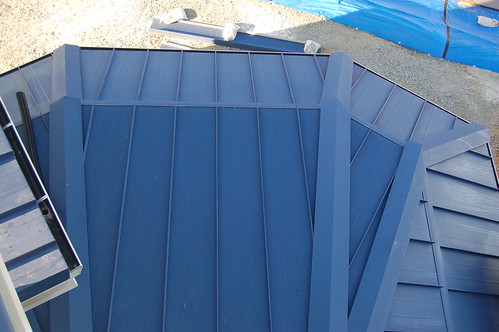
StandingSeam_2 by Vertical Roofing

When you're searching for a roofer for the commercial roofing project you need to find a contractor who understands the special needs of a commercial roofing project. For example it may be harder to operate on the business during business hours so either the business has to be turn off for that repair or replacement or the job has to be done after conventional business hours. Is the roofer you are thinking about to do the job ready to work around your schedule constrictions that might involve working weekends or evenings?

When you start your research for any roofer you don't only need to answer those questions but you also want to hire a company which will perform a high quality job with no lot of time delays. Going about finding someone can feel as an obstacle by itself but there are some ways to result in the search easier.

Ask people around you for referrals and try to find at least three contractors to provide you with written bids on your job. Prior to going any more you need to make sure that the contractors you are thinking about are fully licensed and bonded. A simple search with the state contractor's board will verify in case your roofer is licensed and if you will find any past judgments or claims against their license.

Once you select 3 or 4 roofers to put bids, you should get ready for that bids to be widely varied. Roofers will have brand preferences which will vary and could element in more or less than the next guy for a labor estimate. The greater detailed an itemized bid is the more helpful it will likely be for you to see in which the cost are going to be incurred. Don't, however, select a roofer based solely about the bid price. Any low ball bids might be tempting to consider, but if they are low due to poor quality workman ship it might not be worth it ultimately.

As they say, you generally get that which you pay for, if you can afford a mid-priced bid it's always smart to go up within your budget rather than down. You also should select your roofer based on how professional these were and just how comfortable you anticipate you'll be dealing with them.

Finally your cost will vary based on which kind of roofing material you choose along with the cost to haul your old roof to the landfill. If you are looking for places to cut corners on your roof, rather than cutting labor cost you may want to inquire about a metal roof option. Metal roofs could be cost effective and energy efficient which makes them overall money savers for that long term, as well as on commercial buildings they can be really low maintenance. Plus given that they can be placed along with an existing roof, you don't need to possess the old one removed and hauled away, that make a large effect on your cost.

Choosing a comerical roofing company in your local area, does not have to be a struggle. For more information, visit http://www.vancouverroofers.net